


(re)Matriating Indigenous Community Archives ((re)Matrializando Archivos Comunitarios Indígenas) (MICA) is an Indigenous memory project and collaborative, community-based digital archive of social movements, organizations and communities. It was born out of, and is animated by, Indigenous women’s organizing in Mexico and the transborder community building of the Latin American Indigenous diaspora in what is now the United States. Rather than acting as a repository, we decolonize the archive by collaborating in the cultivation of Indigenous memory and shared knowledge as a seed bank. Additionally, unlike repatriation, (re)matriation does not only return cultural artifacts and knowledge to an Indigenous community, it reweaves that knowledge back into the community, the territory or land, and culture. MICA provides technical assistance and labor to Indigenous organizations and community members in collecting and digitizing their documents, videos, photos, and ephemera to build and catalog their collections in ways that make sense to them. Knowledges, strategies, and stories of community survivance gathered and generated through MICA are then (re)matriated within social movement organizations and communities. Through our collaborative work, we reseed the art and practice of Indigenous resurgence and community organizing through community archive building, intergenerational dialogue, digital exhibitions, and popular education, among other strategies.
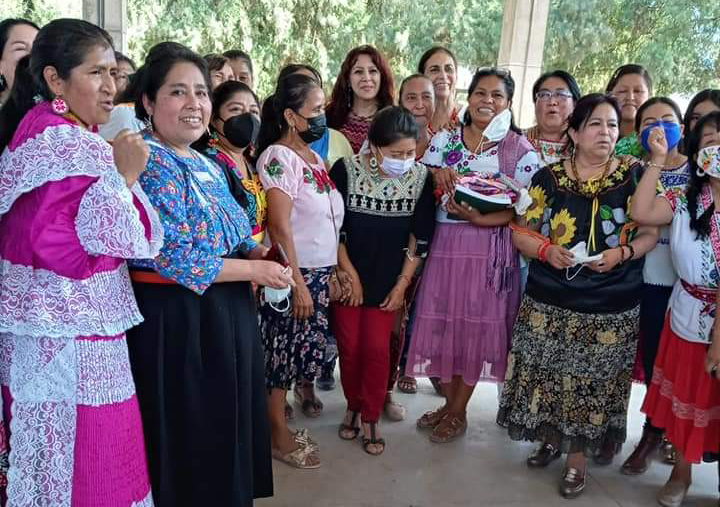

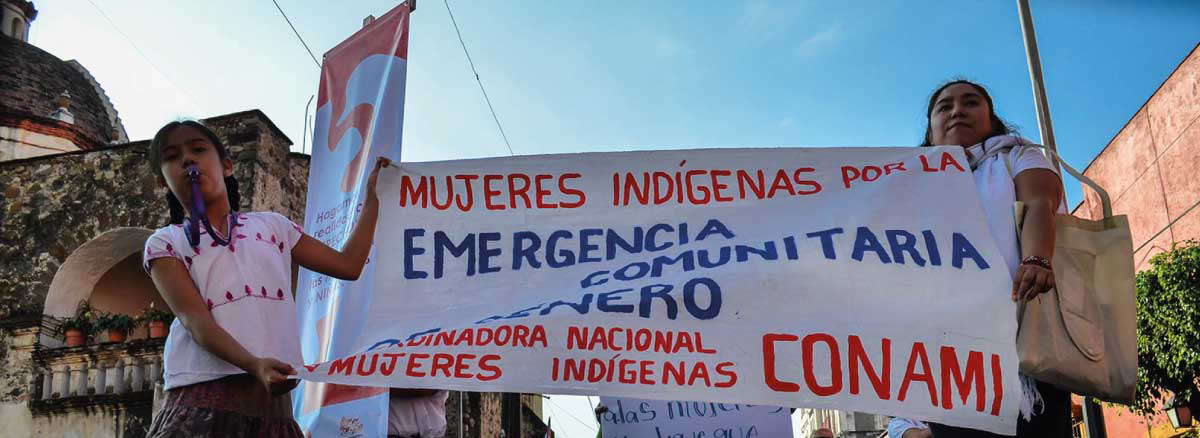
MICA emerged in relationship to Indigenous women activists who have been central to struggles for Indigenous survivance and women’s rights, but who have often been excluded both from scholarship and narratives of resistance. Our experience accompanying this organizing for over twenty-five years has shown that women’s (and feminine embodied people’s) stories, memories, genealogies of struggle, and histories of movement are often ignored and minimized. Thus, we foreground them in the process of collaborative documentation and community archiving.
This memory work developed relationally with activists who wanted to preserve and transmit Indigenous diasporic memory and share histories of the powerful organizing that was led by Indigenous women across Mexico, Guatemala, and Indigenous migrant transborder communities. It was also born out of the urgency to (re)matriate materials from institutions, researchers and individuals that have been generated about or by the community to be replanted and grow intergenerational dialogues, strategies, visioning and healing.
Our archive is inspired by the organizing and world building of Indigenous transborder communities. California is estimated to be home to northward of 500,000 Indigenous people from Mexico hailing from diverse regions and states. While one fourth of all farmworkers in California are Mixtec and Trique, Los Angeles alone is home to an estimated 250,000 Zapotec migrants who began migrating during the bracero program of the 1940s and settled in the city in large numbers in the 1980s. The Indigenous diaspora in Los Angeles also includes many Maya refugees who, in this same period, fled the civil war in Guatemala and settled the neighborhoods of Westlake and MacArthur Park. Their numbers have only grown since then, rising to an estimated 125,000 throughout the county of Los Angeles.
Since the resurgence of Indigenous activism across Abiayala in the early 1990s, members of the founding activist and migrant generation have passed on, many before their time, making the gathering and seeding of Indigenous memory and social movement knowledge a pressing issue. We accompany knowledge keepers and work with them to gather their own materials to archive their memories and materials, in order to revitalize, and seed new leadership and consciousness within their movements and organizations. MICA bridges these Indigenous activists with students and emerging Indigenous researchers by developing and teaching classes on Indigenous community archives, data sovereignty and digital humanities to preserve these knowledges for generations to come.
